
A New Chapter with the Louisville Orchestra
In early July, our family—my husband, our two daughters, and I—moved from Montreal to Louisville as I began the Creators Corps residency with the Louisville Orchestra. We are all excited for this next chapter. Our eldest just started kindergarten and is loving it, and the girls are settling into their new bedroom with bunk beds (though after the first week, our two-year-old realized she was no longer contained like in a crib and now gleefully wanders the house at bedtime). For me, this move marks the start of something I’ve never experienced before: a season-long collaboration with an orchestra. Composers tend to work with orchestras in bursts—fly in, rehearse, hear the performance, fly out—but this time, I get to be here, part of the city and the orchestra.
Some of my own earliest orchestral memories are from growing up in Appleton, Wisconsin. Once my sister Erinn and I began playing in the nearby Green Bay Youth Symphony as teens, our family had access to affordable tickets to see its parent organization, the Green Bay Symphony Orchestra—a group which, sadly, no longer exists. The anticipation for these concerts began long before the music. We’d stubbornly park far away where it was free. I still vividly remember the sharp ache in my ankles as we speed-walked to the hall, thin tights barely shielding me from the bitter Wisconsin cold (a small price to pay for dressing in my finest for the orchestra). Inside the lobby, a Chihuly chandelier shone above us, and even the sound of the piccolo warming up felt glittery, the whole experience impossibly elegant. The musical quality was the highest we knew.
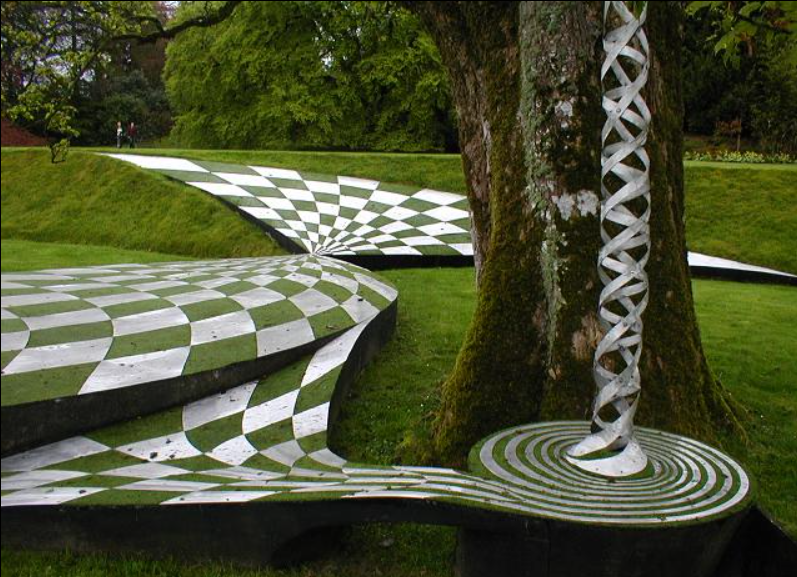
One vivid memory of the GBSO is hearing Michael Gandolfi’s The Garden of Cosmic Speculation. My family had little experience with contemporary classical music, but thanks to the orchestra’s thoughtful preparation, we had done our research—reading about and viewing images of the surreal, physics-inspired Scottish garden behind the piece. Though the style was new and challenging for me, I found it fascinating and could engage with it, and hearing it live with the audience felt like being part of something bigger. Another special memory was a youth outreach program run by Music Alive with the GBSO, mentored by composer Dan Kellogg, whom I’m lucky to still call a friend nearly twenty years later. The program gave kids and teens the chance to write for the Green Bay Symphony Chorus, and it’s where I composed my first piece—complete with my own text, including such lines as “Darkness flies on the wings of a beautiful dragon.” I was, admittedly, a rather inwardly dramatic teenager.
These memories are examples of how an orchestra did more than perform concerts, but rooted itself in the community, opening doors for people to engage, learn, and create. But the anecdotes also reveal how fragile this ecosystem is. The GBSO closed in 2015 due to financial struggles, and Music Alive, which connected over a hundred composers to orchestras nationwide, is also gone. Such programs survive only with care and support; if we value community, we must protect it.
Returning now to the present, I can think of no better example of protecting and nurturing that community spirit than Teddy Abrams and the Louisville Orchestra. I’m truly inspired by what he’s done here and the way he speaks about the orchestra’s role in the community. Here, “community” isn’t just a buzzword—it’s the heartbeat of the organization, felt in every program, performance, and educational initiative. The one-of-a-kind Creators Corps program is an integral part of that vision, and I’m honored to be a part of it this season, alongside fellow composer Anthony R. Green. I look forward to experimenting with new sounds, collaborating with other creatives, and inviting audiences into worlds that are, I hope, a little otherworldly, a little magical, and that help contribute to community through shared experience.
-Chelsea Komschlies, Active Creator in Residence