
Inside the LOCC Selection Process
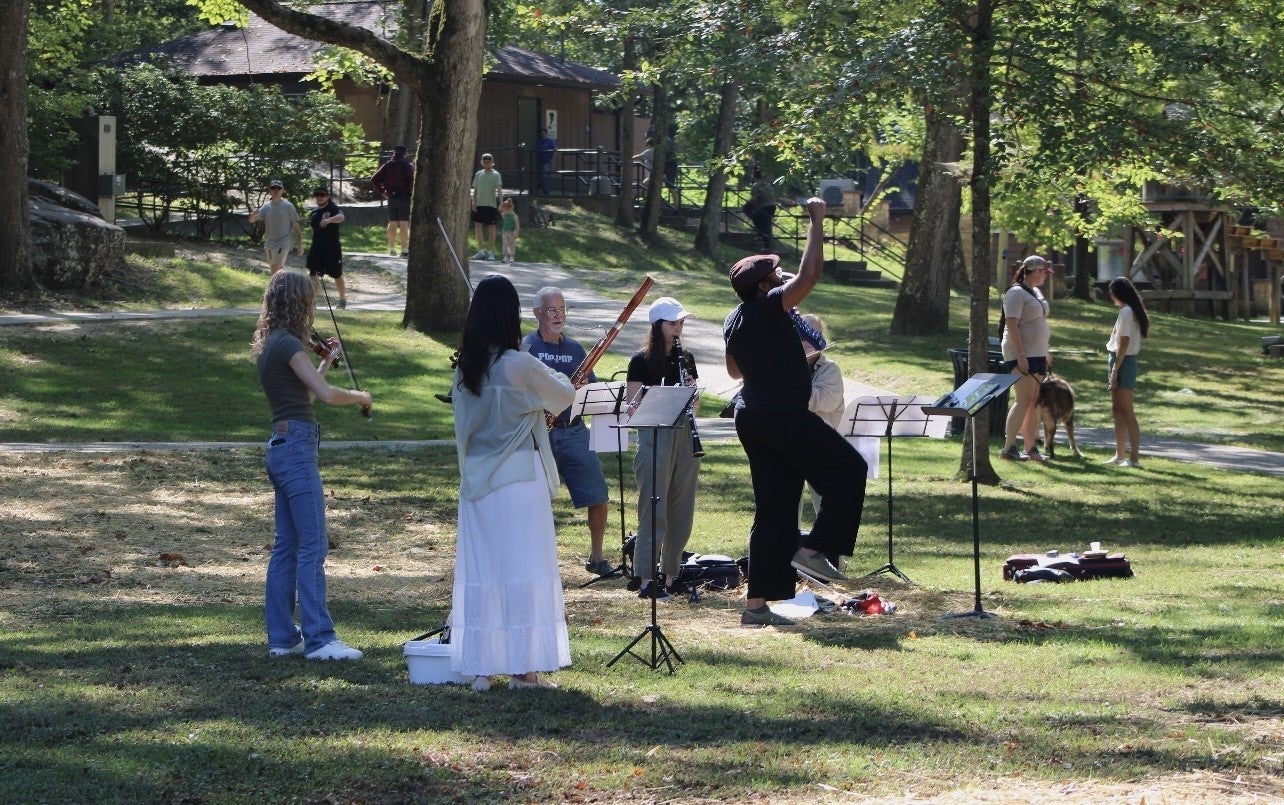
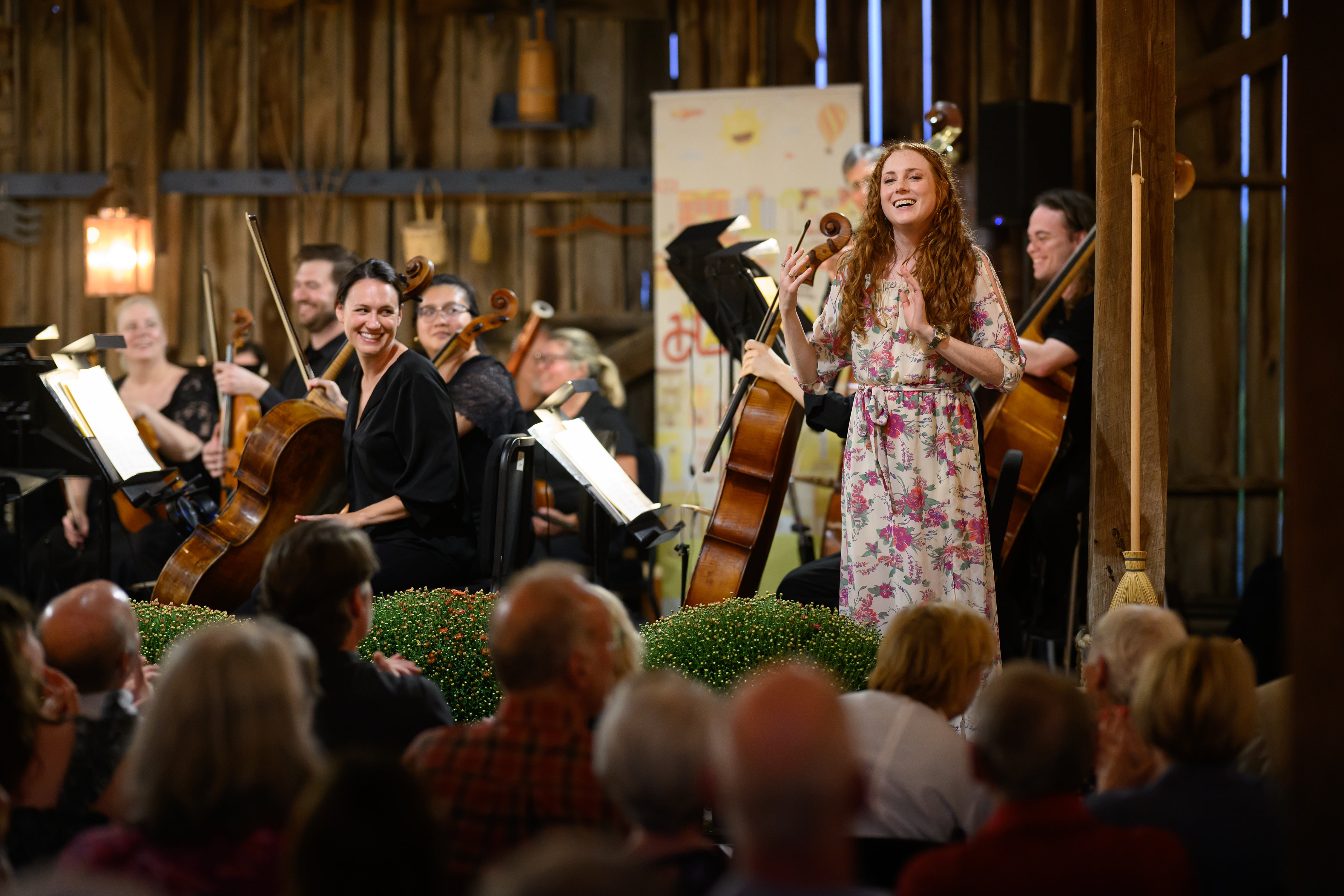
Our 2025–26 season is officially underway! Anthony and Chelsea are now firmly settled as Louisvillians, and this month we premiered the first works they’ve composed for the LO—both site-specific pieces for our In Harmony tour. Chelsea composed Shaker Hymn Medley for Shaker Village, inspired by the Shakers’ musical traditions that she discovered during her visits there. We premiered the piece to a thunderous ovation in the beautiful Meadow View Barn—one of the most intimate concerts I’ve ever seen us perform. On September 19 and 20, we premiered Anthony’s 13 Parts for the Falls, a sound installation featuring ten of our musicians alongside artist Lacy Hale at Cumberland Falls State Park, with the performers situated right beside the Falls themselves. [The performance hasn’t occurred as of this writing, but I hope to share an update in next month’s blog post!]
Applications for the 2026–27 season closed at the end of August, and I wanted to share a deeper look into our selection process. Composers often ask me about the types of applicants we’re looking for and how the judging process works. We seek artists who demonstrate:
-
A compelling artistic voice and vision, with the experience and technical skill to achieve their creative goals.
-
A community-oriented attitude: they create and understand their work in relation to a community and are eager to collaborate with organizations such as schools, arts groups, and nonprofits.
-
A genuine interest in living in Louisville and being a Louisvillian—and a Kentuckian, more broadly—for at least 11 months.
From these qualities, a particular profile emerges: an artist who finds creative energy by connecting to and being rooted in a specific place, allowing that experience to inspire and shape their work. Many of the best pieces written by LOCC composers have been deeply influenced by their time in Louisville. That doesn’t mean we only want site-specific works (though several composers have written them). Instead, we want composers to create work that grows out of being part of this community and that speaks back to it in meaningful ways, using their own voices and artistic methods.
Many composers are surprised to learn that style or aesthetics are relatively low on our list of priorities. Whether a composer’s style is traditional or experimental is not important to us—we’ve performed works across the full spectrum. What matters most is clarity of artistic voice (which is not the same as style) and a community-oriented mindset.
To make our selections, we use a three-round judging process with 21 adjudicators. I intentionally assemble a panel with diverse backgrounds, including composers, conductors, performers, educators, and community leaders (some with no musical background at all). Some are local, while others have national profiles. At least two or three members of the orchestra serve as panelists in Rounds 1 and 2, and I also include at least one former LOCC composer in each of those rounds—no one understands the program better than those who’ve lived it.
Round 1 is divided into two sub-panels of six judges each:
-
One reviews only work samples (scores, recordings, videos, etc.), made up primarily of composers, performers, and conductors with deep experience in contemporary music.
-
The other reviews only essay responses (project proposals, reflections on creative process, community orientation, etc.). This panel includes composers as well as educators, administrators, and community members.
Each application is randomly assigned to two judges from each sub-panel, so four panelists in total review every application. Dividing the process in this way ensures a balance of expertise and perspectives.
Once Round 1 is complete, I compile the average numerical scores along with the top 10–15 rankings from each judge. We don’t just look at the highest averages—we also pay attention to candidates individual judges feel strongly about. The top 20–30 applicants move on to Round 2.
Round 2 brings in six new judges from diverse backgrounds, none of whom participated in Round 1. Each reviews all of the top applications based on our criteria: Artistic Craft, Community Orientation, and Mutual Benefit/Impact. Every application question—including work samples—addresses at least one of these categories. After independent review, the judges gather to discuss and identify the 4–5 finalists who will advance to Round 3. At this stage, numerical rankings still matter, but consensus and qualitative insight guide the discussion.
Round 3 consists of Zoom interviews with the finalists and Teddy Abrams, Sarah Lempke O’Hare (our Director of Strategic Partnerships), and me—the LO staff who work most closely with the selected composers. This is more like a conventional job interview, designed to assess each candidate’s personality, approach to collaboration, and the specific projects they envision. We also consider the day-to-day question: can we see ourselves working alongside this person?
Finally, we consider the chemistry of the group as a whole. Which pair or trio of composers will form the best team? While this can’t be predicted perfectly, we look at how the finalists’ projects, approaches, and backgrounds might complement one another and create fertile ground for collaboration. Since the work of our Creators Corps composers—both individually and collectively—shapes our entire season, we take this final step very seriously.
October will be another exciting month for LOCC, with performances of new works by Anthony and Chelsea as well as a world premiere from alum Lisa Bielawa. More on that in next month’s post!
-Jacob Gotlib, Senior Creators Corps Program Manager