Scotland Is Speaking
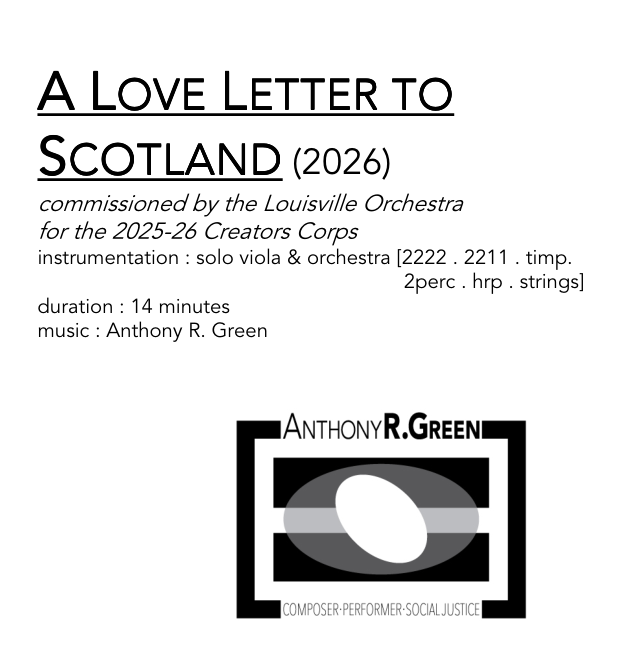
It is so terribly bittersweet that the Louisville Orchestra season is over its halfway point, which also means the time for the Creators is winding down. My next performance with the orchestra will be the premiere of a work for solo viola and orchestra titled A Love Letter to Scotland. While it can be considered a viola concerto (I wouldn’t wince if someone referred to this work as a concerto!), both the soloist and I agree that it is more of a fantasy or a rhapsody in two movements. As you can guess from the title of this piece (and the title of the Blog!), it is all about Scotland! Below is an excerpt from the program notes that are in the score:
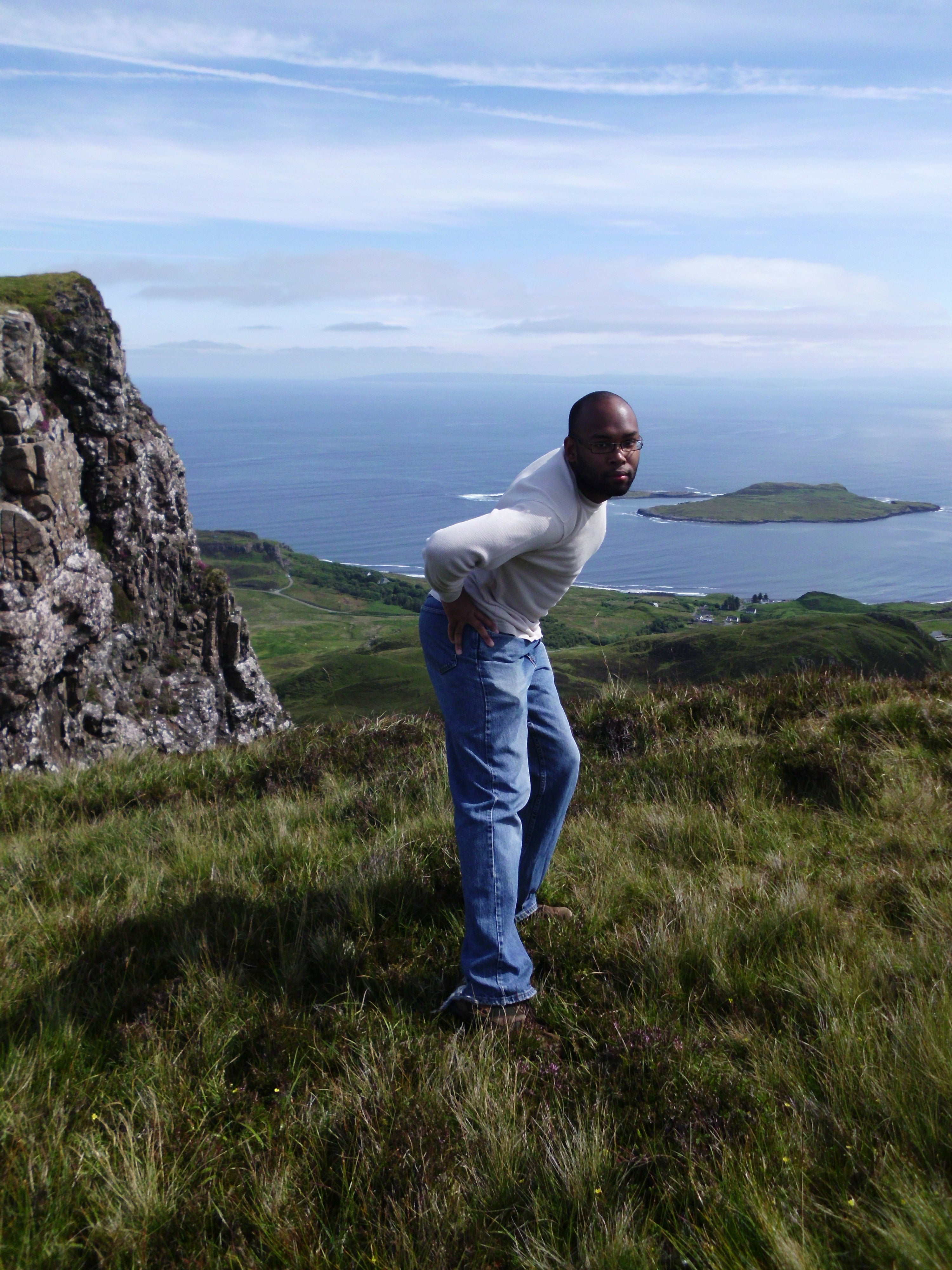
When setting out to compose a musical love letter to one of my favorite places in the world, I did not imagine the incredible emotional journey I would undertake, which has – thankfully! – only multiplied my love for Scotland. I first visited Scotland in 2011, exploring Edinburgh, Glasgow, the Isle of Skye, and some wonderful short stops in between. It was during this trip that I purchased 100 Great Scottish Songs – a book that came with notated melodies, a bit of history about most of the tunes, and a CD with various renderings of what was notated. I knew one day I would work with this book in some way, but I never imagined it would be a concerto-esque work for viola and orchestra! As this piece developed and I progressed deeper into my research, I learned that some of my favorite musicians – including Tori Amos, Paul Robeson, and Charles Ives – worked with Scottish folk songs. I thrust myself headfirst into learning about bagpiping tradition, and it actually changed my ears/the way I listen to bagpipe music! (I fell in love with its various subtleties as well!) I ended up coming across an incredible Scottish-Ghanaian man on YouTube (@ScotlandHistoryTours!!) who talked so enlighteningly about tartan, family, and what it means to be Scottish. And in a tribute concert to a wonderful Scottish fiddler who works in California, I found a video of a tune composed by the ex-girlfriend of one of my past college roommates!
A Love Letter to Scotland, while a work for solo viola and orchestra, is more of a fantasy or rhapsody rather than a concerto. It quotes 16 different traditional Scottish songs, and 2 versions of one of the songs – Auld Lang Syne. Overall, the piece loosely starts as a blessing of the elements involved in the performance – the audience, the musicians, the space, the music, the air – as well as a blessing of everything leading up to that moment and everything that will happen afterwards. This is the first movement. It is followed by a musical reflection upon Hogmanay – the Scottish New Year celebration (which often times and traditionally has involved a special type of blessing called a saining ). As the dancing and the pride winds down, one final iteration of Auld Lang Syne is presented, but in a more introspective manner – one that foreshadows the repetition of this tradition, and affirms the continuation of a ritual that has lasted for centuries. As both saining and Hogmanay involve connection and community and celebrating life, A Love Letter to Scotland is also a celebration of life, through the lens of myself looking through the lens of Scottish traditions.
The traditional tunes that are quoted in this piece are all divine! They are :
The Skye Boat Song, The Gallowa Hills, Kelvin Grove/The Shearin’s No’ For You, The Bleacher Lass o’ Kelvinhaugh, Loch na Garr, Dowie Dens of Yarrow, My Bonnie Lies Over the Ocean, The Bonnie Banks o’ Loch Lomond, Auld Lang Syne (original and popular versions), The Atholl Highlanders, Cam Ye By Athol, Mormond Braes, Bonnie Ship ‘The Diamond’, Haughs o’ Cromdale, and – of course – Scotland the Brave (you probably don’t know its name, but you’ll recognize it once you hear it!).
One tune that did not make it into the concerto officially is one that brings a tear to my eye. That is Will You Go, Lassie, Go? There is a chance that a performer of this concerto can sneak this melody into the cadenza in the second movement, though! With that, please enjoy THIS VIDEO of this wonderful song from the soundtrack to the movie Sinners! What’s wonderful about this version is that it combines folk music traditions from the Americas, heavily featuring the banjo, which is originally an African instrument. It is a wonderful mixture!
-Anthony R. Green, Active Creator in Residence