


Boldly Go
Happy spring, Louisville!
It’s been a busy stretch—most of my time has gone to finishing ENTER[ic] PORTAL, my new orchestra piece for the Louisville Orchestra premiering in April. My dear friend TJ Cole (from the original Creators Corps year!) and I are collaborating on the electronics, and we are finishing our recording sessions. It’s the most ambitious work I’ve written so far, and I’m excited to share more about it and about my collaboration with TJ soon.
This week, we’re in the middle of something very different: the premiere of Microsensorium, my piece for orchestra and AI video, as part of the MakingMUSIC concerts for Jefferson County Public Schools and OrKIDStra. Hearing thousands of 4th and 5th graders respond—full-volume cheering at the end of pieces—has been genuinely moving. My husband and I are bringing our two daughters to the concert this weekend, including our almost-three-year-old for her first orchestra experience.
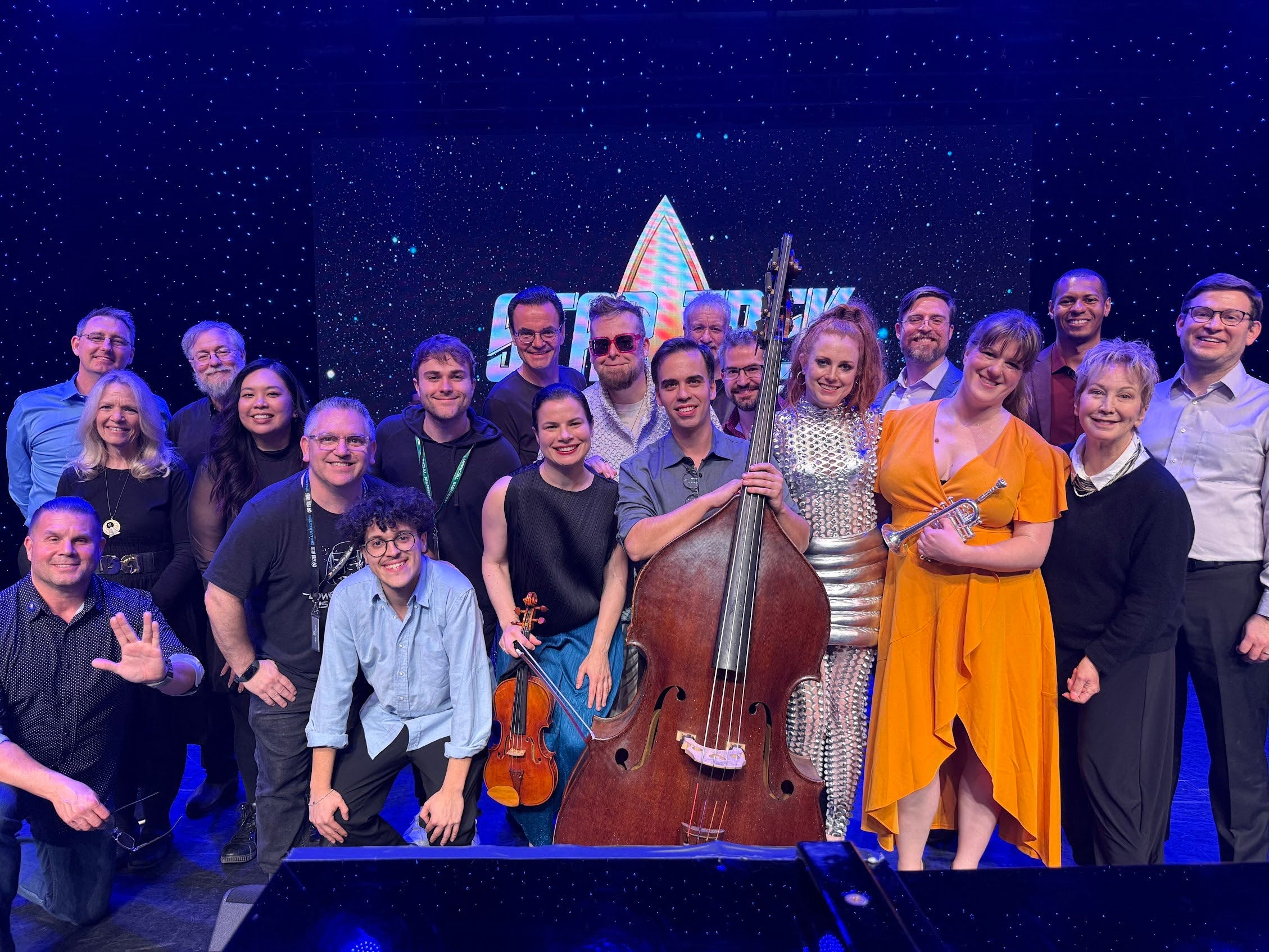
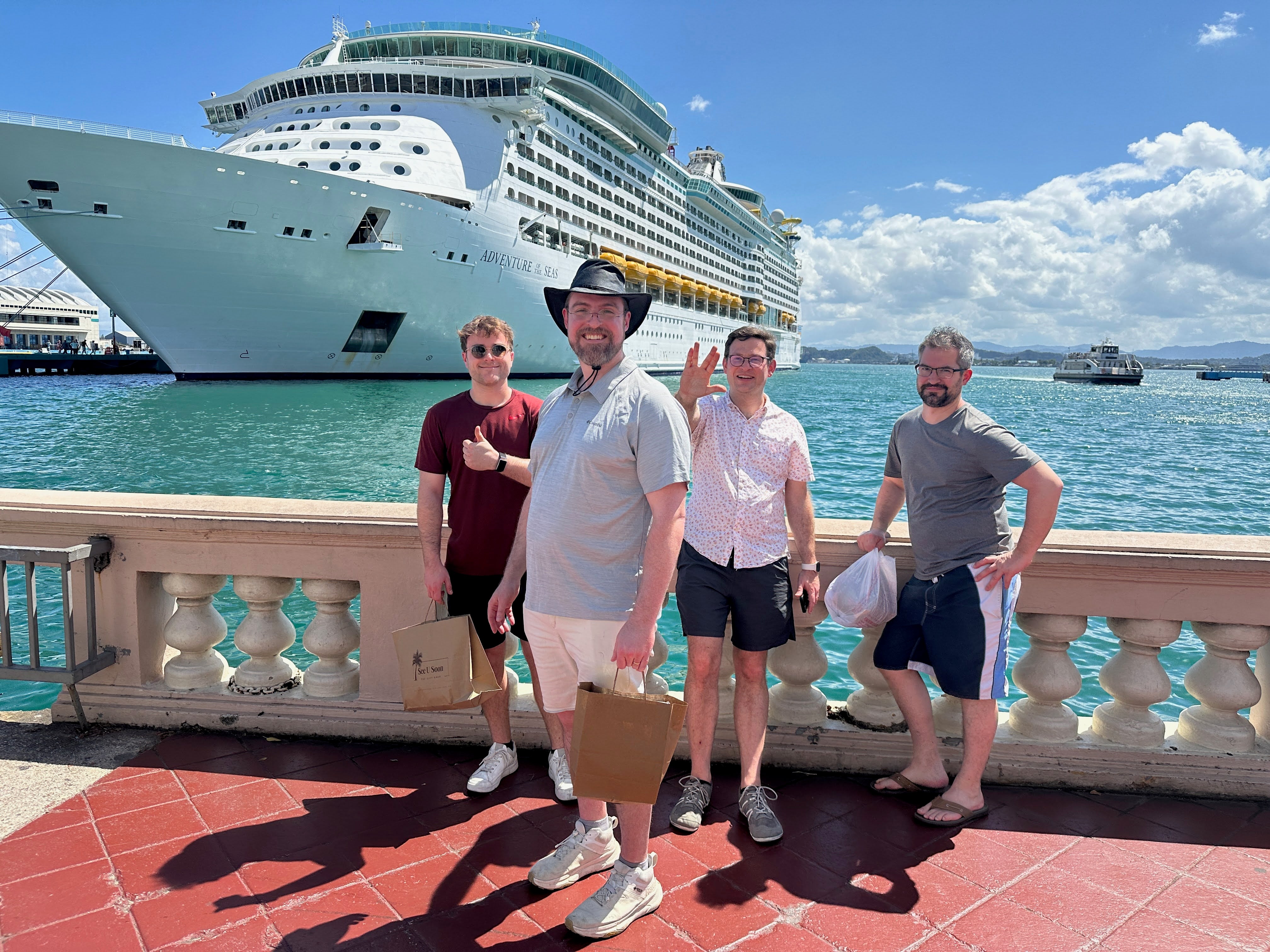
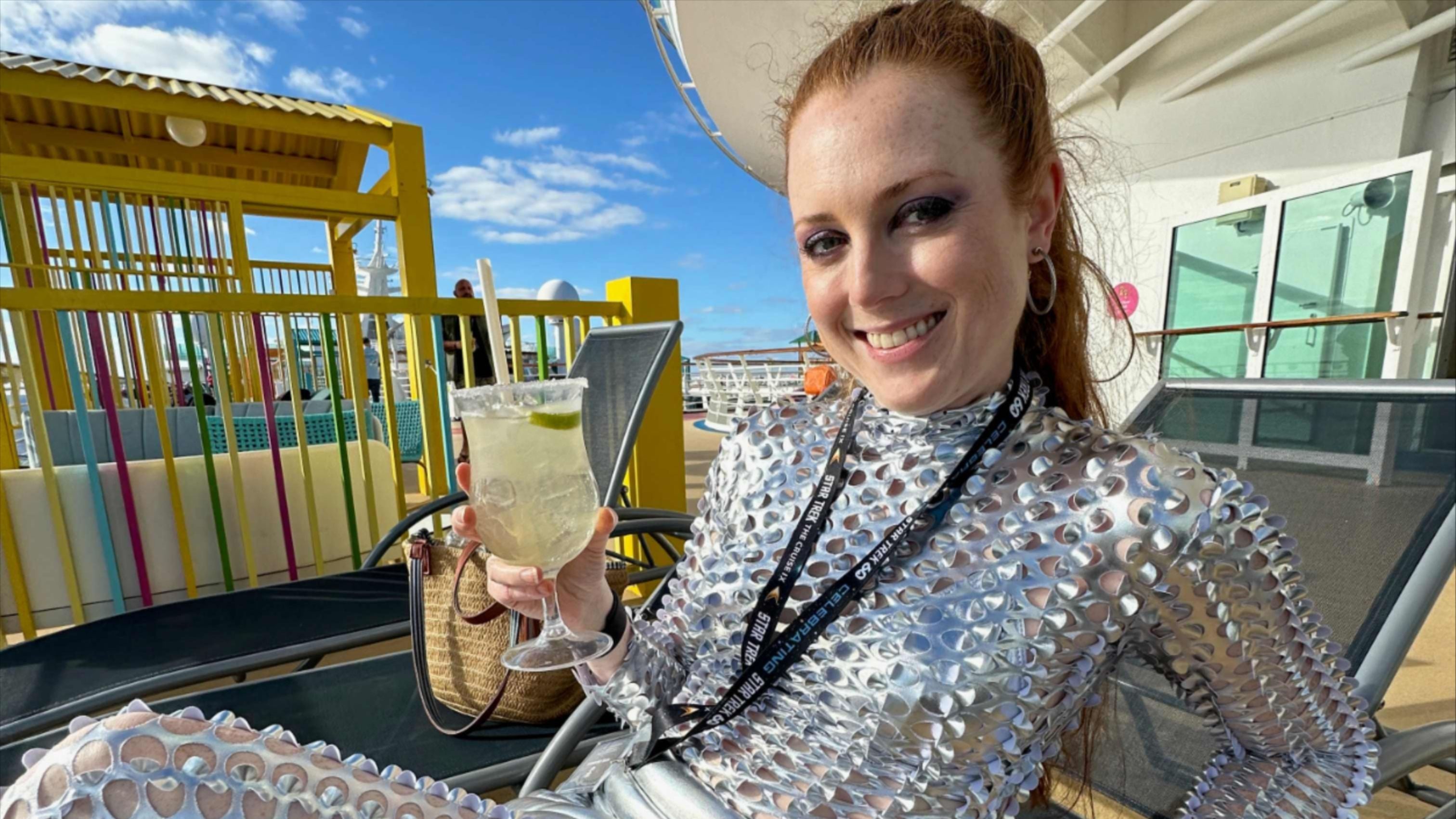
Right on the heels of my deadline last month, I found myself in a completely different musical setting: performing with fellow Curtis Institute alumni on the Star Trek Cruise.
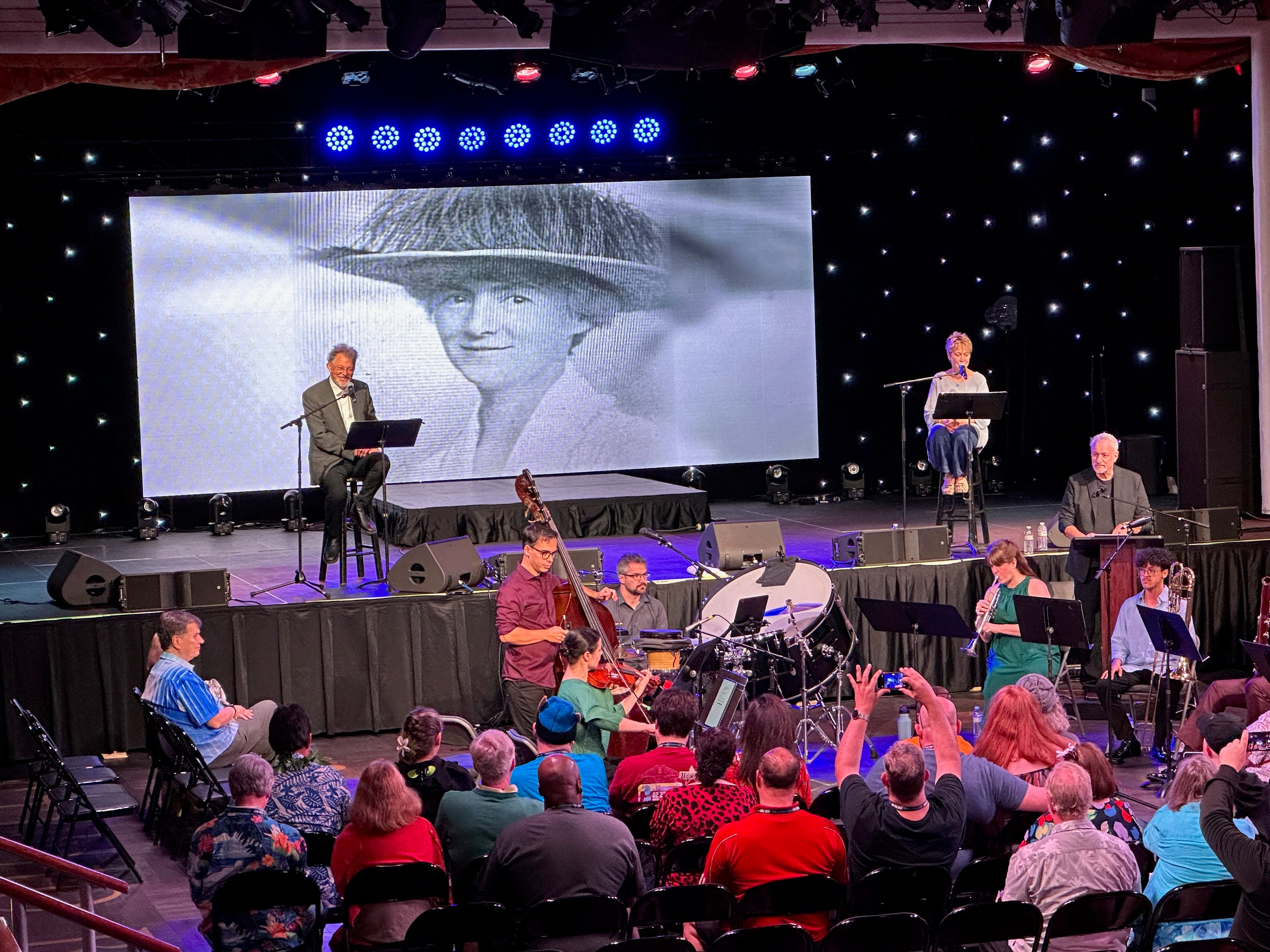
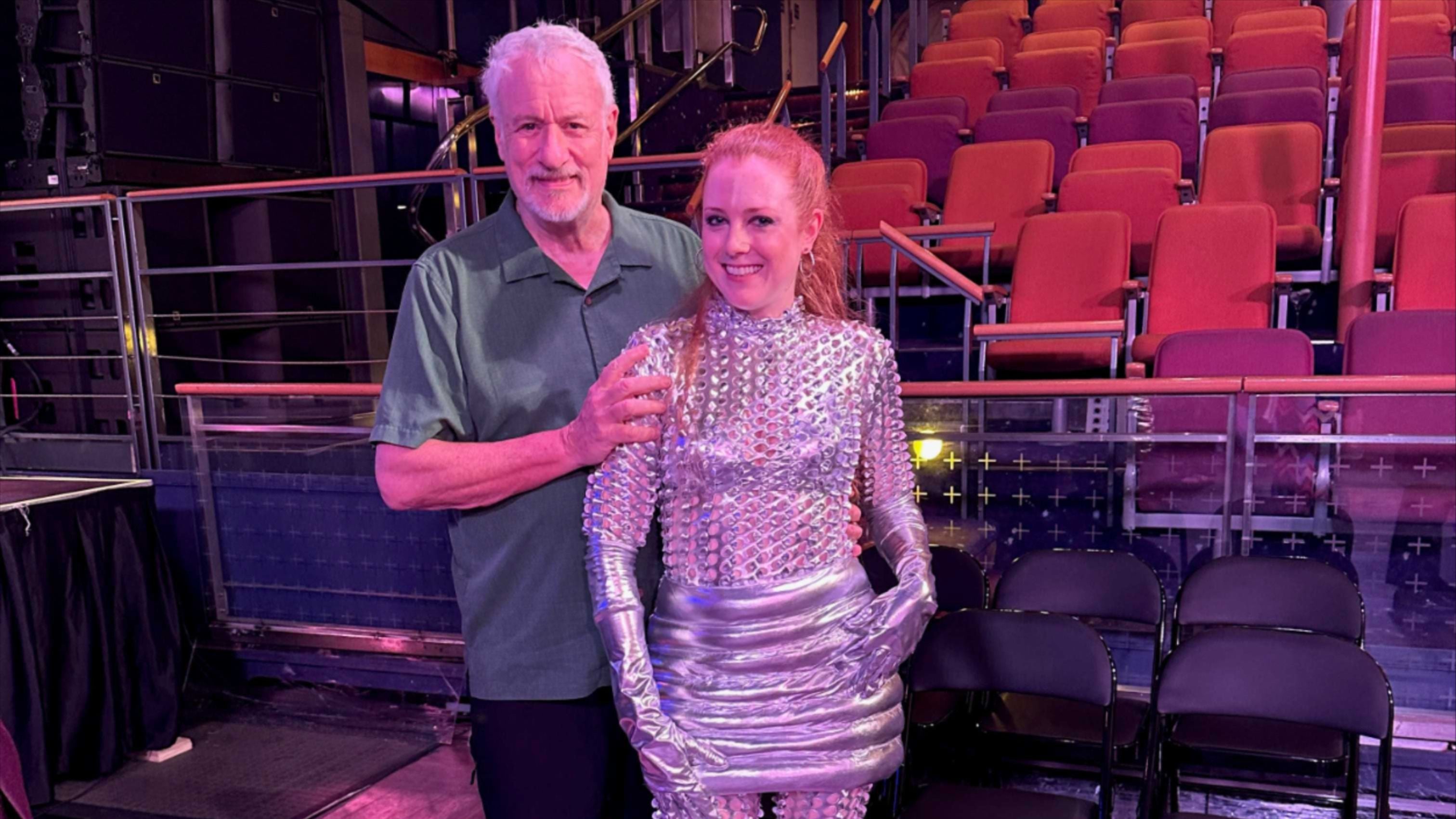
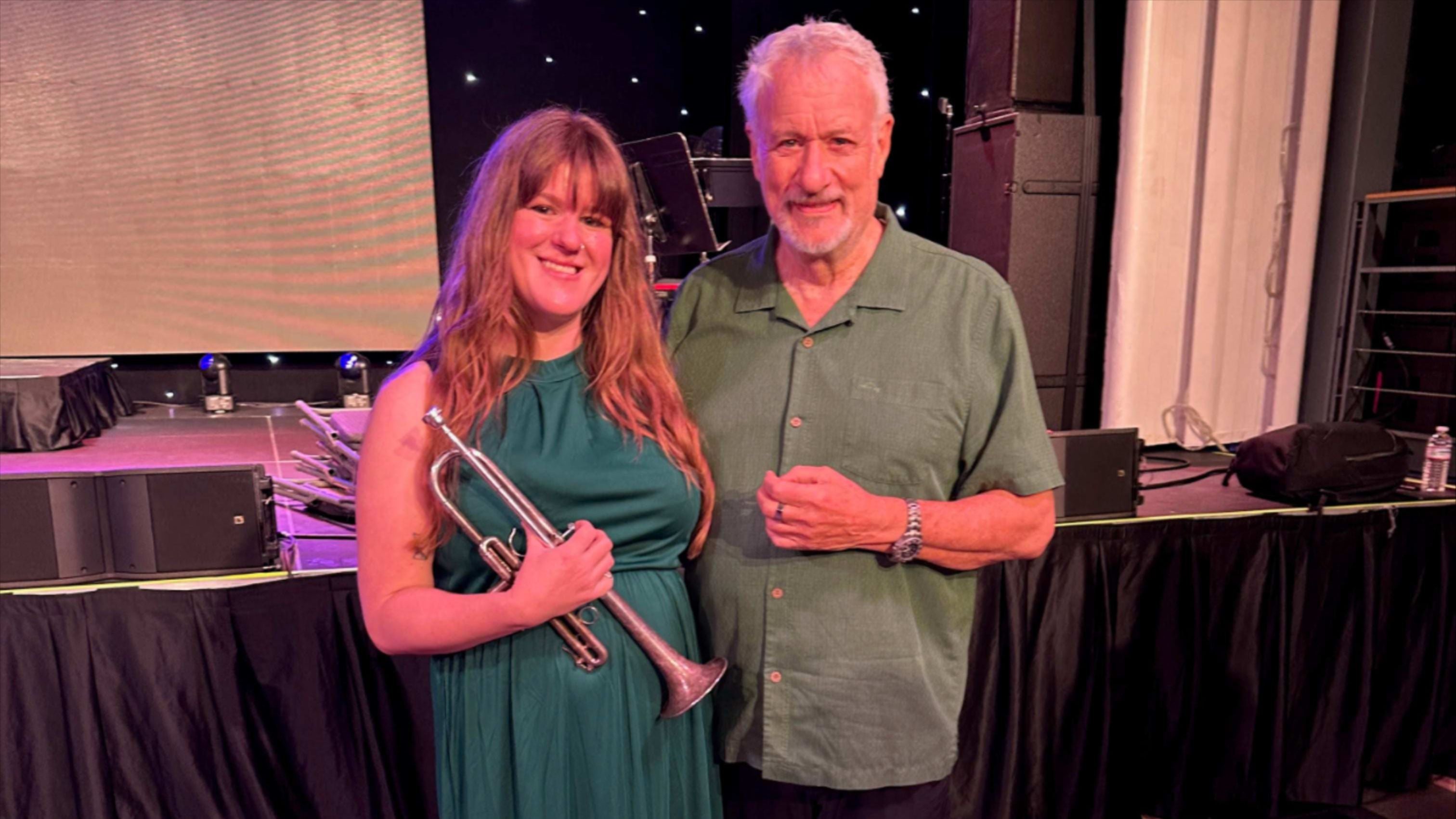
This project started unexpectedly. In 2024, my friend and former Curtis composition classmate Nick Diberardino asked if I could arrange a medley of Star Trek themes for a live show onboard the cruise, in collaboration with actor John de Lancie (whom you may know as Q from The Next Generation!). What followed was one of the more unusual and joyful musical experiences I’ve had—blending classical performance with sci-fi fandom, storytelling, and a very enthusiastic audience.
The group of Curtis alumni were thrilled to be invited back this year, and along with performing the soprano solo for The Original Series in my Star Trek medley, I had the pleasure of arranging Elton John’s “Rocket Man” for a live performance with William Shatner, who—at 94—reprised his famously theatrical version of the song from the 1978 Science Fiction Film Awards. (If you haven’t seen it… you should. You’ll thank me later. Maybe.)
There’s a moment in that video where he squints his eyes shut and says, “And I’m gonna be… HIGHHH… as a kite by then,” as this dreamy, slightly campy synth sound slides in. I wanted to find a way to recreate that kind of effect acoustically, so I gave Robin Brawley, our double bass player, a “seagull” effect (coined by George Crumb, it’s somewhere between a seagull call and a sci-fi sound).
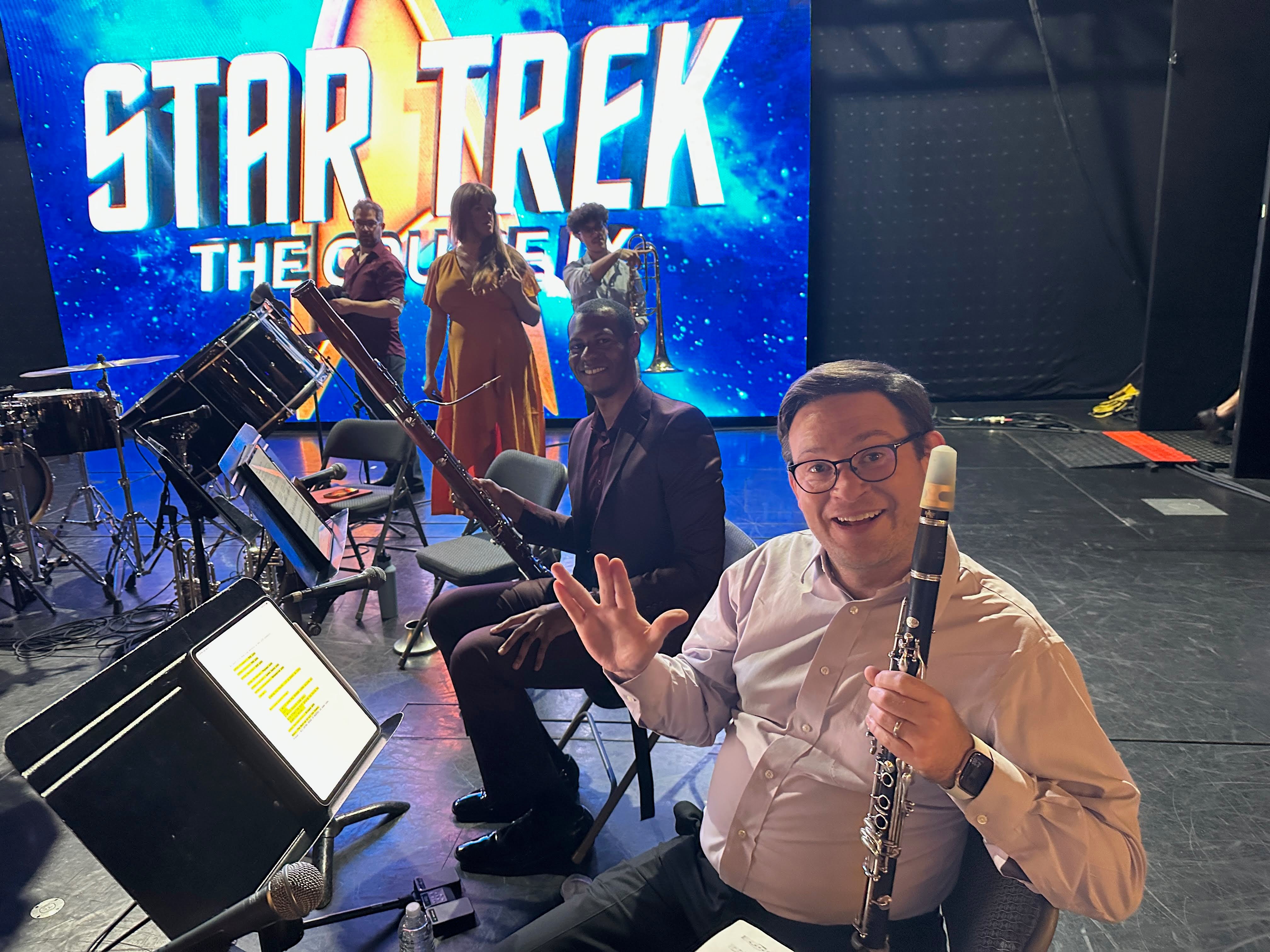
Bill latched onto it right away and started shaping the moment in rehearsal. He had the group build it out—Bella Hristova adding harmonic glissandi on violin, and then pulling in Josh Butcher on bassoon. Josh started with a sustained note. Bill stopped him: “No, no, no. You have to sound more like you’re high.” Josh tried a multiphonic. “Yeah,” Bill said. “That’s good.”
It was such a funny and endearing moment, but it also struck me was how differently those sounds were treated than I’m used to, especially just having turned in this massive orchestra piece full of extended techniques. In contemporary classical spaces, these techniques can come with a certain baggage—we experiment with them, build language around them, sometimes even feel the need, on one end, to justify them to audiences who might find them strange or wonder if it’s “music,” or on the other end, prove something about our value as contemporary composers through how we use them. But not here. Bill heard the extended techniques—no “Wow, what was that interesting sound?” or “I didn’t know the instrument could do that,” just “Ok, good. What else.” The sounds were neither precious nor met with hesitation; they either worked in the moment or they didn’t. There was something refreshing about that. It made me wonder what it would feel like to hear them more often in settings without all the baggage attached.
The whole performance ended up feeling like a real collision of worlds—our classical backgrounds, John de Lancie’s expertise in showmanship, Elton John’s “Rocket Man,” and William Shatner’s directorial instincts, all in front of a cruise audience of Star Trek fans. And people loved it—again and again, we heard from Star Trek fans how much the live music from the Curtis alumni throughout the week elevated the experience—how unexpected and exciting it was to hear this level of playing in that setting. It’s easy to think of what we do as orchestral musicians and composers as belonging to certain spaces and audiences. But experiences like this are a reminder that meaningful connections often happen when those boundaries dissolve.
Fun connection: our clarinetist on the cruise, Rob Patterson, used to play with the LO as acting principal clarinet for many years!
Check out this Instagram Reel!
- Chelsea Komschlies