
I Hear America Singing
So reads the title of Walt Whitman’s poem from his collection, Leaves of Grass. His text begins softly:
I hear America singing, the varied carols I hear…
I have been singing for as long as I can remember.
My singing, as most everyone’s, started at home. Just as much as our language connected me to my parent’s homeland in Afghanistan, the songs I was taught did as well (if not more). Some I learned misremembered, some I learned out-of-tune. Some, I realized, were a funny amalgamation of two or more songs. Some, I found out much later, were the little originals my mother concocted to get me to fall asleep.
And I am not unique in this experience with song. It feels as though it is an integral part of our human experience, and one of the most fundamental ways in which we connect.
I recently joined the Louisville Chamber Choir, and from the moment of the first chord I knew it was a great decision. For those who have sung with others, you know this feeling–the visceral warmth of resonance and the feeling of belonging when hearing your voice melt into others' voices are unparalleled.
The minute the chord aligns, tunes, and glows, the group is immediately connected. No small talk, no niceties needed. Immediate camaraderie.
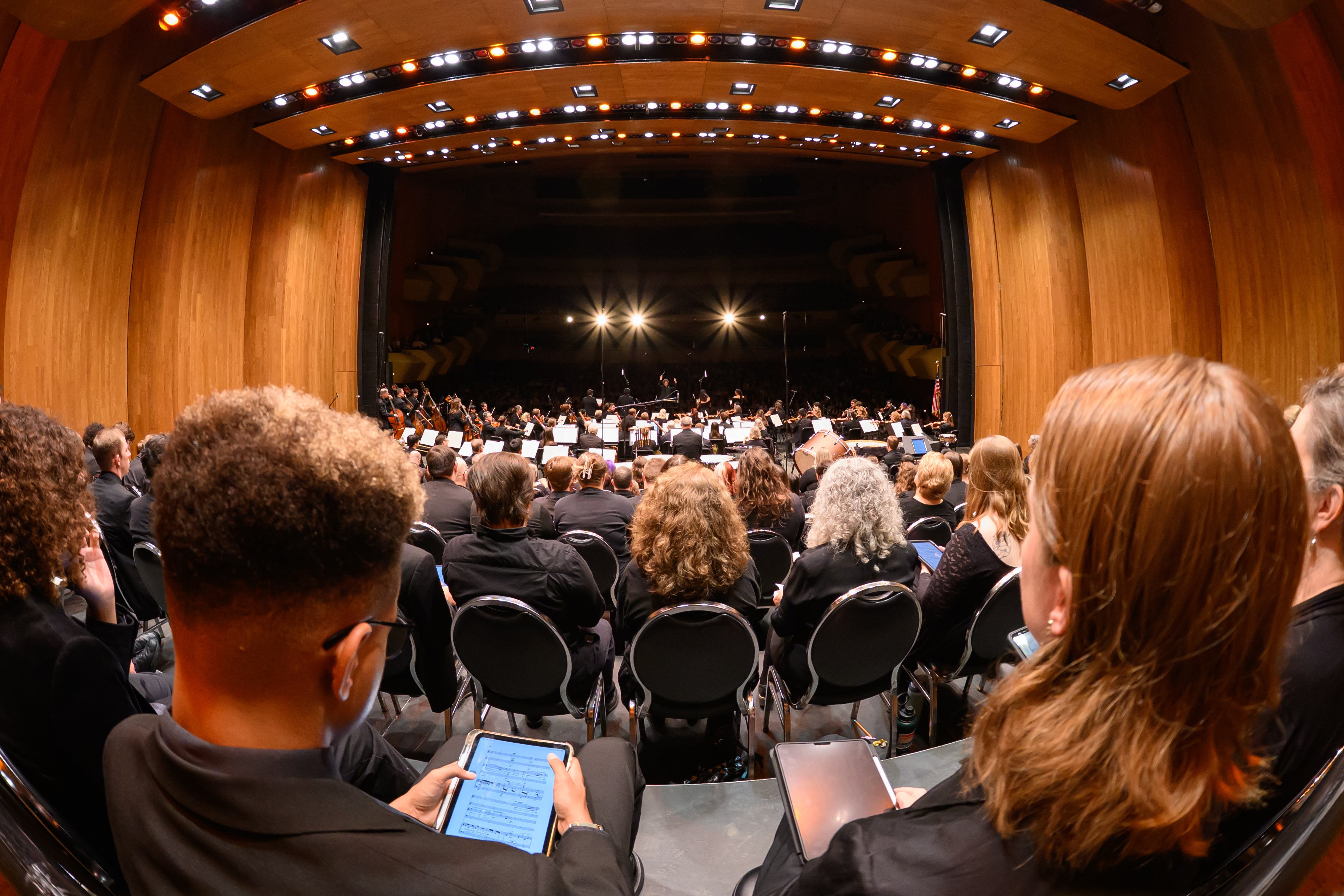
This weekend we will be singing Giuseppe Verdi’s Requiem with the Louisville Orchestra, a massive work that makes opera out of the liturgical text. What I mean by that is that the work’s emotional range runs the gamut. It is serene and frightening at turns, bleak and joyous as in opera. As a choir, we are not only required to sing in tune and match consonants and vowels, but more miraculously, we must collectively produce a singular emotion. You’ll know what I mean, if not earlier, then at least by the first few bars of the Dies Irae.
In a recent interview, pianist Leif Ove Andsnes suggested that “music cannot solve global problems, but I hope [my program] can at least inspire some of the emotions we so badly need right now: compassion, empathy, generosity, understanding, and an appreciation of diversity."
I disagree (partially). I think music can solve global problems. Music offers an alternative to rugged individualism and a disregard for those in need. What would it be like to be responsible to humanity in the same way that singing together in a choir requires of us? What does it mean to extend the sense of empathy that only music-making can teach us to all things?
I’ll close with another of Walt Whitman’s poems from Leaves of Grass: “That Music Always Round Me.” The poem describes his ecstatic experience listening to an unnamed work for choir and orchestra, and ends with these two lines:
I do not think the performers know themselves—but
now I think I begin to know them.
His text points at what I’m getting at – music has the opportunity to offer empathy on a level communication otherwise cannot reach. It involves not only the musicians, but, as Whitman suggests, the audience. Music is a joyous, difficult, and transformative experience that can change the world, if we let it. It, on the most simple level, teaches us to listen.
I’m sure I’ll be changed come Saturday night after singing one too many high Bb’s in Verdi’s Requiem. I hope that you will be too!