
Magnum Opuses
The week of April 7 was perhaps the busiest I’ve had all season—maybe the busiest in years! In addition to managing transitions in my department, I coordinated one of the most complex multimedia platforms of my career: audio samples, keyboard patch changes, multiple layers of video, and lighting cues. All except the lighting were to be triggered live, at predetermined moments in the score, by the LO’s valiant pianist, Meme Tunnell, from an Ableton Live patch with 94 cues. All of this was for the world premiere of Chelsea Komschlies’s work ENTER[ic] PORTAL, which, if you attended either “Appalachian Spring” concert, you experienced as an immersive multimedia event: a psychedelic journey to the center of one’s psyche (through the gut!).
While not Chelsea’s final work of her residency, this piece is not only the culmination of her time but also among her boldest, most unrestrained works to date: an expression of every part of her creative spirit x 100. April is the season of the “big premieres,” and that’s exactly our philosophy with these pieces. The other projects our creators write have a clear set of parameters for duration, instrumentation, theme, or audience; for these pieces, we give our creators a (relatively) unrestricted platform, a massive canvas, and ask them to fill it with their most ambitious musical visions.
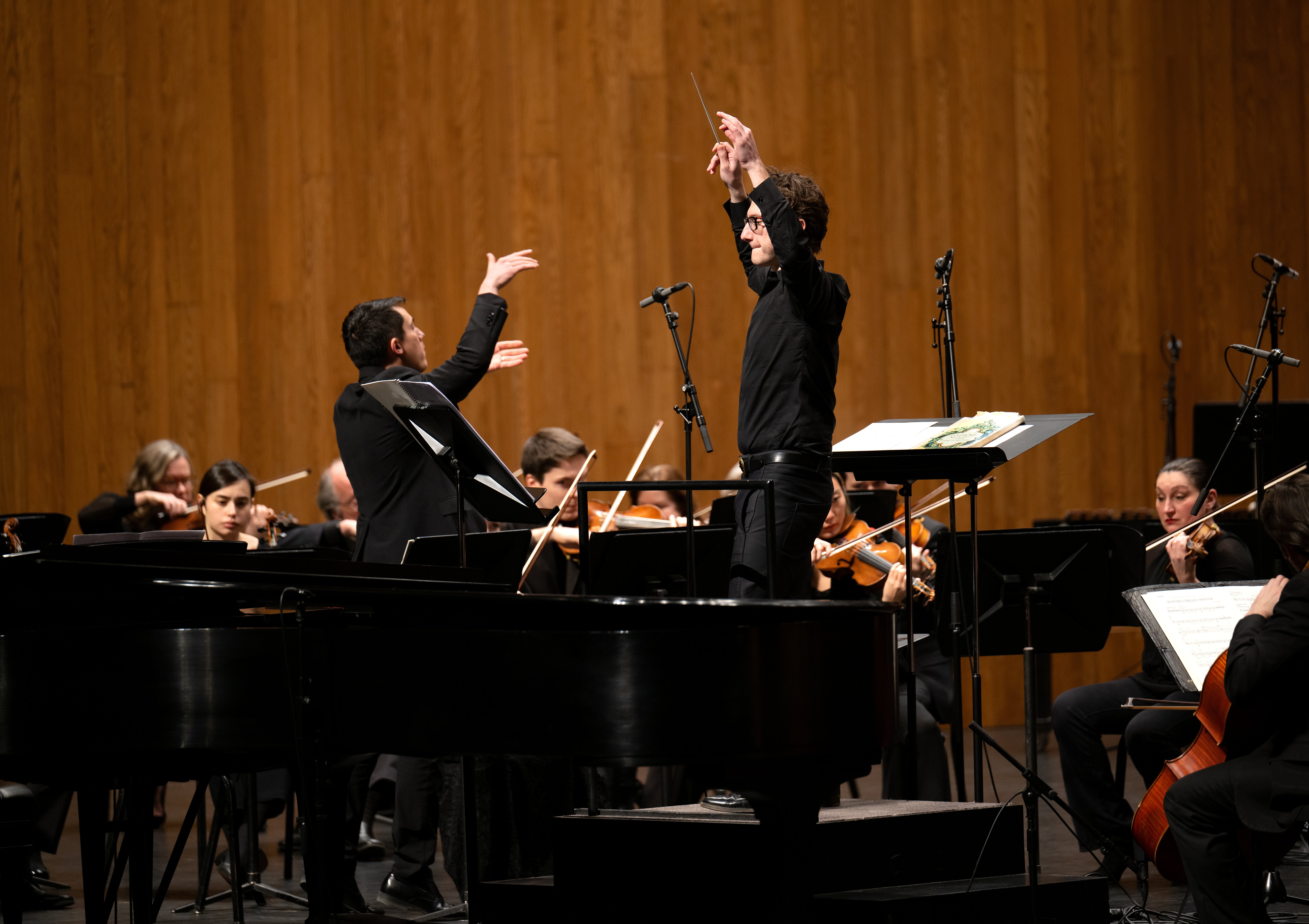
Our first LOCC class had to contend with tight timelines for their “big pieces” yet managed to create bold works that stretched their musical practices and posed fascinating questions for our listeners. Lisa Bielawa’s Send the Carriage Through is partly a commemoration of Queen Elizabeth II’s death but mostly a meditation on leadership (musical and otherwise). At the work’s climactic moment, our concertmaster and resident conductor, Gabe Lefkowitz, stands and becomes a second conductor, leading the orchestra onstage. At the same time, Teddy turns around and conducts a brass ensemble in the balcony!
TJ Cole composed a synthesizer concerto (one of only two I’ve ever discovered!), featuring themselves as the soloist. Phenomenal of the Earth was inspired by phenomena, processes, and even timescales of the natural world, a result of a mini-residency at the Bernheim Forest and Arboretum. I’ve heard many works that play with time in often disorienting or dilating ways, but almost none that create the particular kind of magic of this piece. Tyler Taylor’s Revisions, meanwhile, embeds a saxophone quartet inside the orchestra’s string section, a commentary on instruments, ideas, and traditions that classical music considers inferior or other. The work is huge and wrenching - I described it at the time as an “emotional volcano” - and immerses you in the textural and contrapuntal lava.
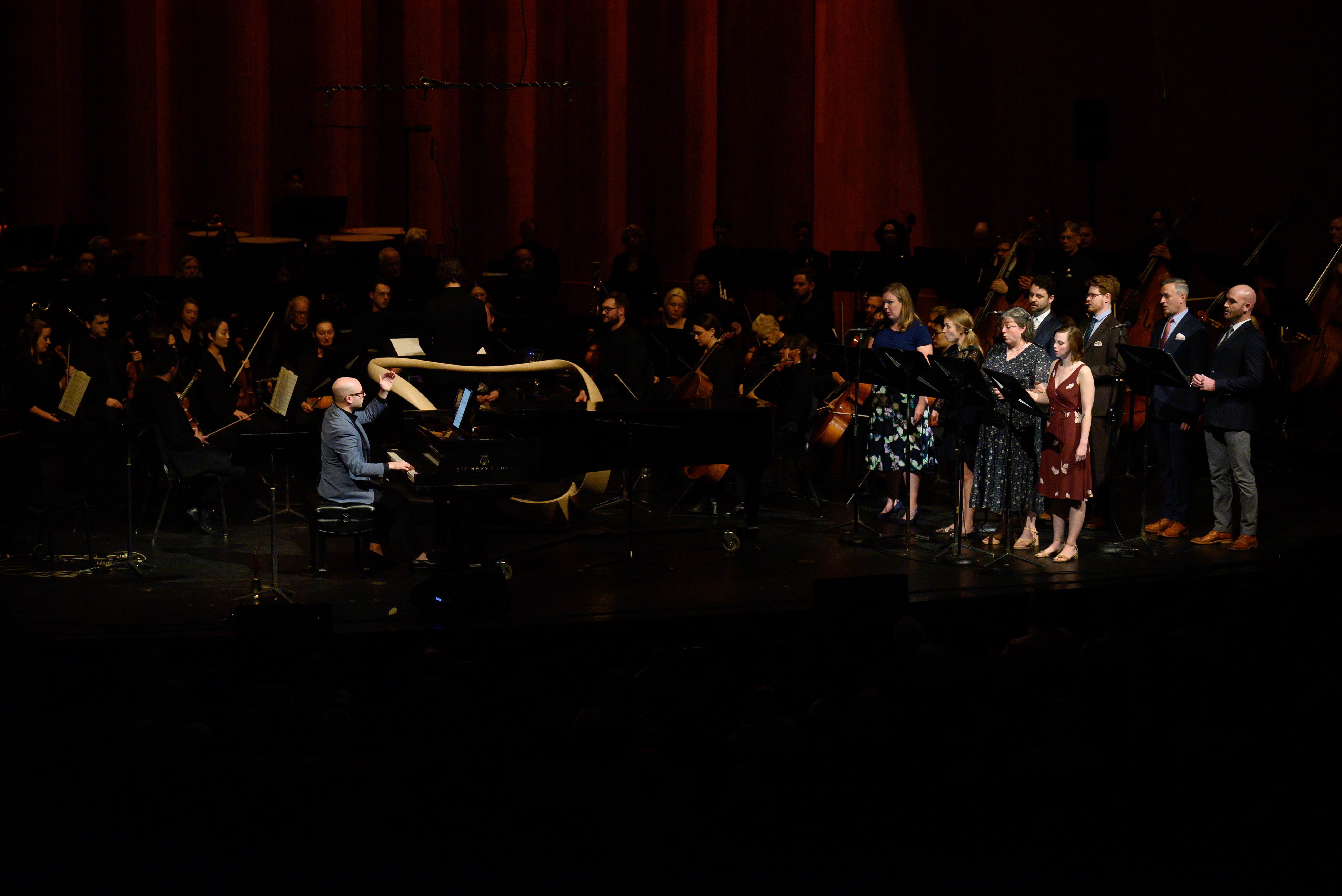
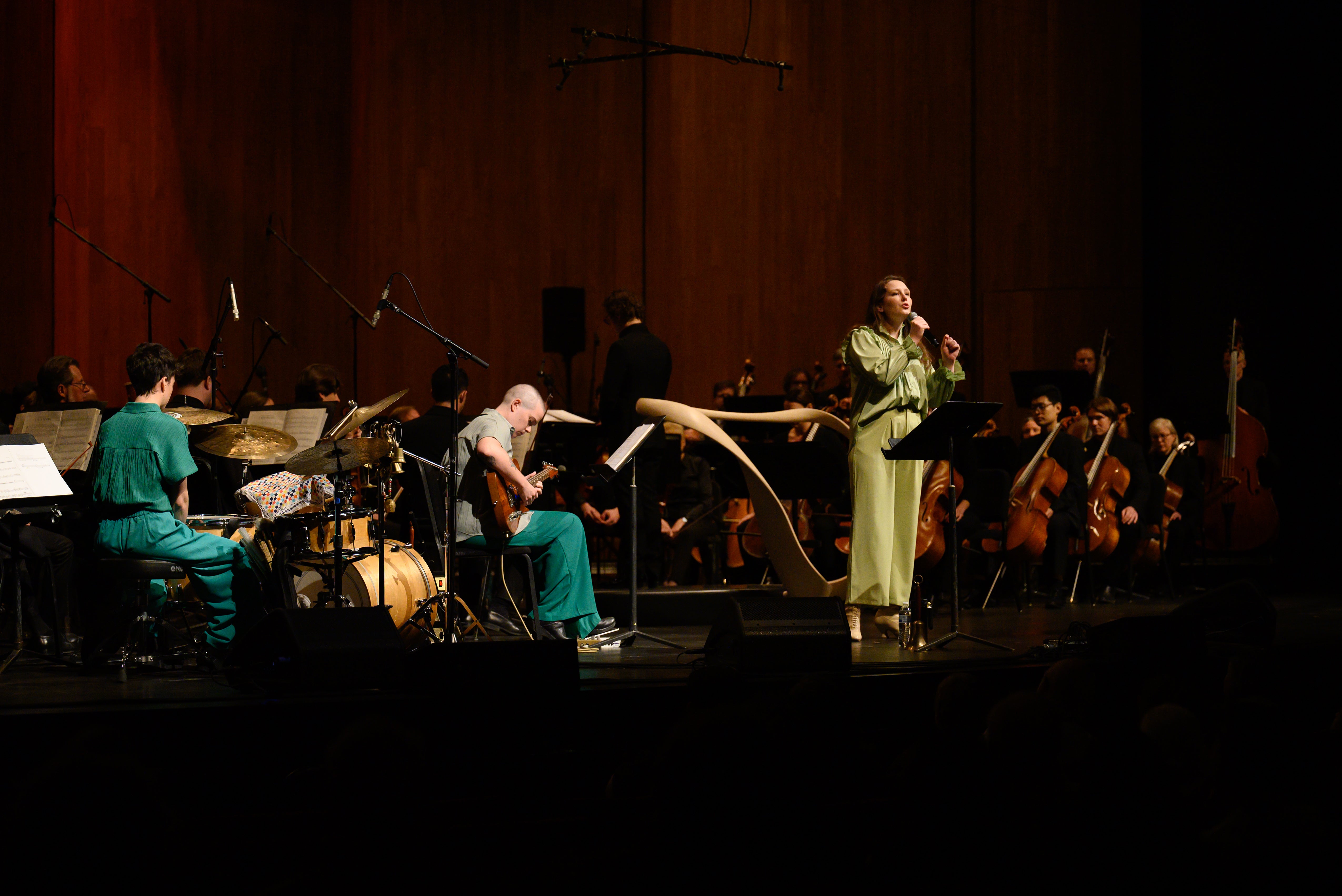
For our next two seasons, we wanted to give our composers more time to create their works. In addition to structural changes to the program, we experimented with the idea of a “Creators Fest”: a mini-festival that would not only feature the world premieres of LOCC works but also present creative voices across Louisville. In 2024, our creators helped curate a real festival featuring visual artists, storytellers, dance, and chamber music, as well as the final Classics concert of our season. Both Alex Berko’s and Tanner Porter’s works focused on the voice, reflecting their backgrounds as a choral composer and a singer-songwriter, respectively. Alex’s Heirlooms featured the 8-voice Artefact Ensemble choir alongside the LO, with lyrics by authors connected to Kentucky or Appalachia. There was not a dry eye in the house at the end of this piece. Even diehard new-music heads were profoundly moved. Tanner, for her part, created a massive song cycle called True Lover’s Knot, which featured her as the vocal soloist and two members of her band on guitar and drums. The work is a reimagining of the traditional song “Barbara Allen,” specifically the version sung by Kentuckian Jean Ritchie. It is a meditation on love, loss, loneliness, and guilt, and, like Chelsea’s work, magnifies every facet of Tanner’s musical voice in a glorious way.
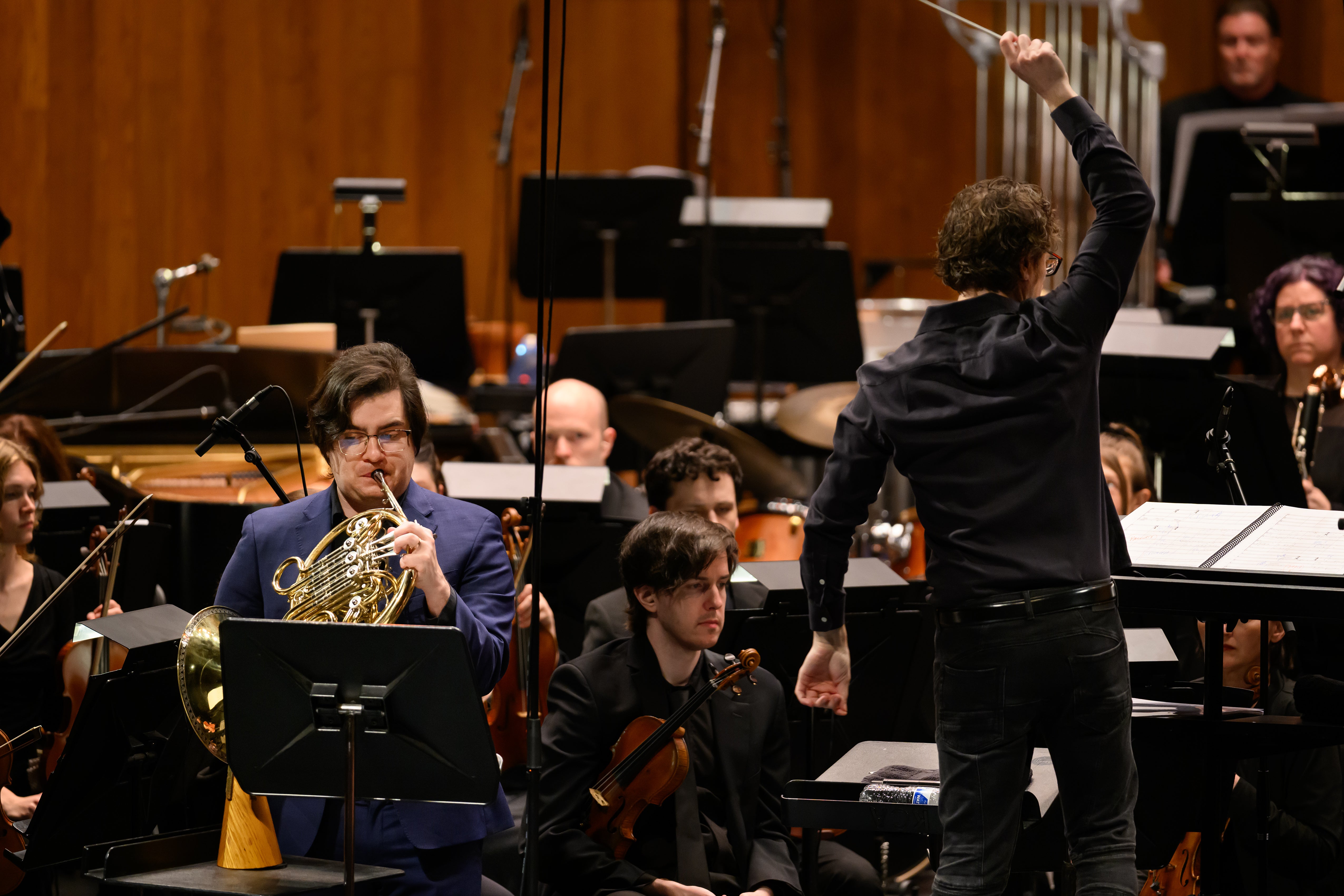
In 2025, our Creators Fest was in name only. We did away with the festival component and focused on the world premiere works. This LOCC class took the opportunity not only to paint on a large canvas but also to expand their palettes. Oswald Huỳnh’s Tiếng explores the tension of language and the impossibility of translation. Lines from poetry inspired each of its six movements, and we projected paintings by ‘Apikale Fouch alongside the music. It’s keening, explosive, tragic, and cathartic. Baldwin Giang worked with our Associate Principal Third Horn (and longtime collaborator) Scott Leger on gift of tongues, a concerto for horn and orchestra featuring virtuosic, unorthodox techniques. Like Lisa, Baldwin also placed horn players in the balcony - in this case, in the shape of a cross, creating layers of spatial antiphony. Finally, Brittany J. Green used this space to present her community project, Lands of Hypnagogia: a collaboration with students at the Waldorf School and animation students at the University of Louisville. The Waldorf School students created the characters and wrote the plot, while the U of L students animated their story. Brittany conducted musical workshops with the Waldorf School students to create musical material based on their story, and then orchestrated their themes. The result is a project that’s truly a sum of the parts - more and different than what each individual contributor could have done alone.
Now, as we reach the end of our season, we conclude our final concerts on April 24 and 25 with the world premiere of Anthony R. Green’s Two Orchestral Sketches. I can’t wait to hear what Anthony does with this expanded canvas and how, like his creators before him, the work he’ll present will embody the most direct expression of his creative voice and stretch both his musical language and our ears.
You may have noticed a pattern in my last several blog posts. For the past several months, I’ve tried to take stock of the different types of work our Creators Corps composers engage in throughout the season and identify throughlines about what these works mean for our program, our creators, and our audiences. While this post focuses on their large-scale Classics works, you can read about their In Harmony tour pieces and community projects. Next month, I’ll delve into Once Upon an Orchestra, a chamber music collaboration with our libraries that’s quite unlike what most composers typically work on!
- Jacob Gotlib, Creators Corps Program Manager