
On Nightseed
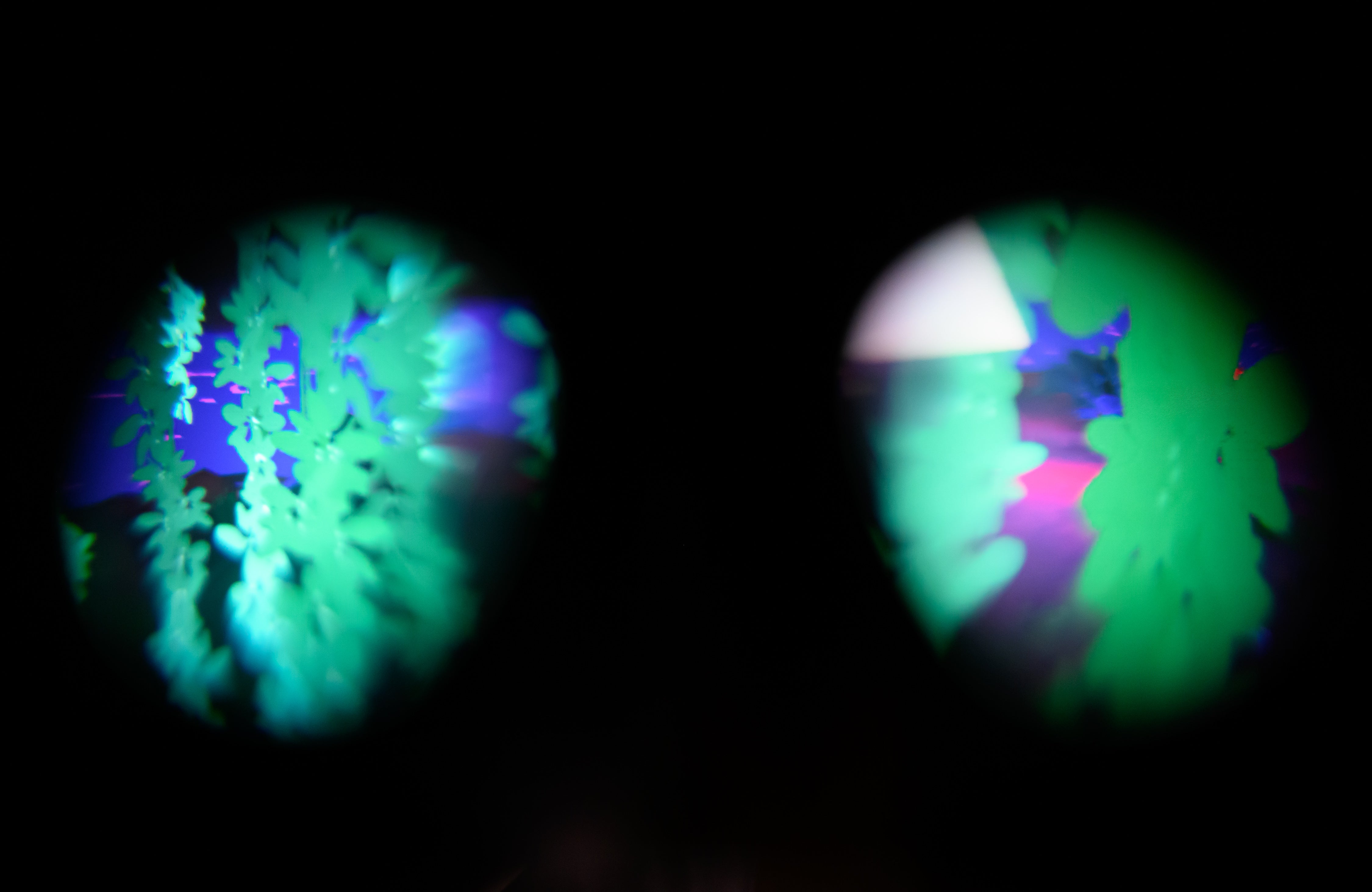
When I put on the Meta Quest VR headset, the first thing I noticed was its bulk: its robust weight pinching my glasses to my face, seemingly supported entirely by the bridge of my nose. But within moments, the colors on the screen sprang to life, and I was in. The white walls of KMAC’s education space transformed into indigo rivers banked with luminescent bushes, cupped by an aurora-esque night sky. In the center of it all, a massive tree welcomed offerings, sounding thanks with ghostly chords. A harp plucked vaguely Celtic, video game-esque melodies, its sound abundantly clear but seemingly existing in an unimaginably distant galaxy.
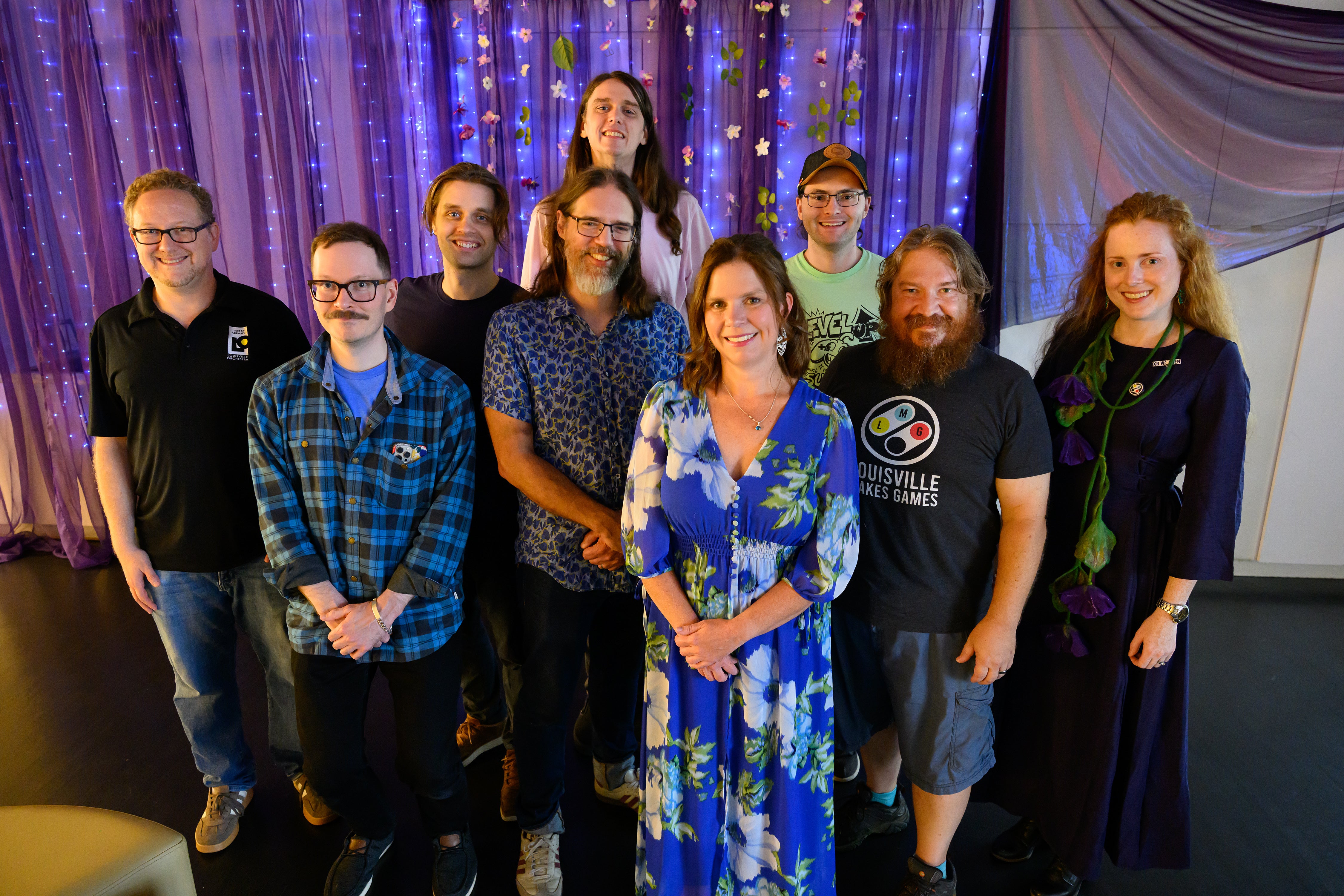
This was nightseed, an immersive VR experience created by former LO Creators Corps composer Chelsea Komschlies and designers from Louisville Makes Games, a local video game developer collective. Cross-modal perception, synesthesia, and mixed media have long been important in Chelsea’s work; I was thrilled when she proposed this as her community project last year, as the LO (at least as long as I’ve been here) had never worked on anything quite like this. The journey from our first meeting with LMG to the work’s premiere on August 21 at KMAC has been a crash course in building fulfilling community collaborations and finding common language between artists from different backgrounds.
Like all great artworks, I think we didn’t realize the scale and complexity of some of the challenges until we were in too deep and had to find solutions! Coming from the music world, I had no concept of what designing an interactive VR environment entails (Chelsea, thankfully, knew a bit more, having worked in this medium before). “Co-location” was one of the biggest challenges: figuring out how to see and track other players in the space. Another was mapping the boundaries of the KMAC space into the game world - so that you didn’t, say, walk into an empty field and end up bumping into a wall! (During the performance, we thankfully had volunteers to “guide” folks away from columns, walls, and other players.) Finally, reliable networking proved to be a consistent head-scratcher, even during the performance - we had to make sure all the headsets were connected to the same network so that all the players were, essentially, playing the same game at the same time! I could never have known how mind-bogglingly complex some of these fundamental factors would be.
We also faced a personal challenge: our lead designer unfortunately had to leave the project midway through development. This jeopardized our ability to present the work in May, as we’d originally intended. Thankfully, by that point, we knew Chelsea was staying in Louisville for at least another year, so we could postpone the performance until it was ready. Additionally, LO’s harpist, Grace Ropeke, with whom we were collaborating, got a new job at the St. Louis Symphony, so we had to restart the musical process with a terrific new harpist, Louisa Woodson. Getting the new team up to speed took significant time and unexpected resources, but ultimately they were able to complete and even elevate the project beyond what we’d initially conceived.
The performances on August 21 and 22 at KMAC were remarkable. We offered ten 15-minute sign-up slots per day, with 5 headsets per slot. All slots sold out a week before the event. Half the slots sold out in one weekend because of a single Reddit post! We achieved an average attendance of 70% - remarkable for a free event. Attendees loved the immersive, interactive experience, and many said they’d love more multimedia events like this one. We tapped into an audience shared by all three organizations - LO, KMAC, and Louisville Makes Games - and we now know we can cultivate further.
I wanted to list some personal takeaways here - basic principles, mostly for myself to remember, as we continue cultivating relationships with community partners:
-
Make sure the collaboration is mutually beneficial. Avoid situations where one party feels they’re bending too much to accommodate the other.
-
Get on the same page as soon as possible. Be pedantically, almost comically, clear about roles (technical, administrative, artistic) and what everyone’s “lane” is. Same for the project’s dimensions and scope.
-
Nonetheless, be flexible and willing to improvise, especially the later you get in the process.
-
Always be aware of “language differences” between mediums, organizations, and structures. Translate and fill in gaps as best you can.
-
Be transparent about challenges and when things veer off course - don’t be afraid to bring up thorny issues right away.
-
Be sensitive to discrepancies between your and your collaborators’ resources and capacities - be generous if you have more.
-
If the initial project is successful, continue searching for new ways to collaborate - don’t let a single project define your partnership.
-
The least likely collaborations can often yield the most fruitful results.
I encourage you to check out this beautiful video summary of the event, shot and edited by Andrew Nice and Garrett Logan of Alpha Line Media, along with photos by our incomparable photographer, O’Neil Arnold.