
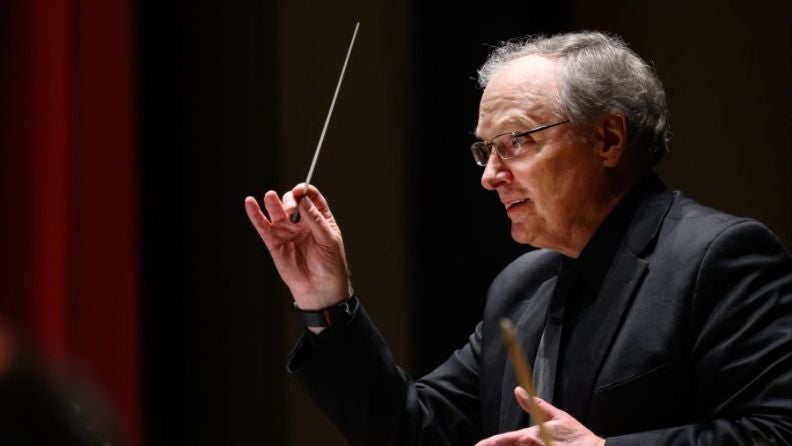




Jorge Mester, Music Director

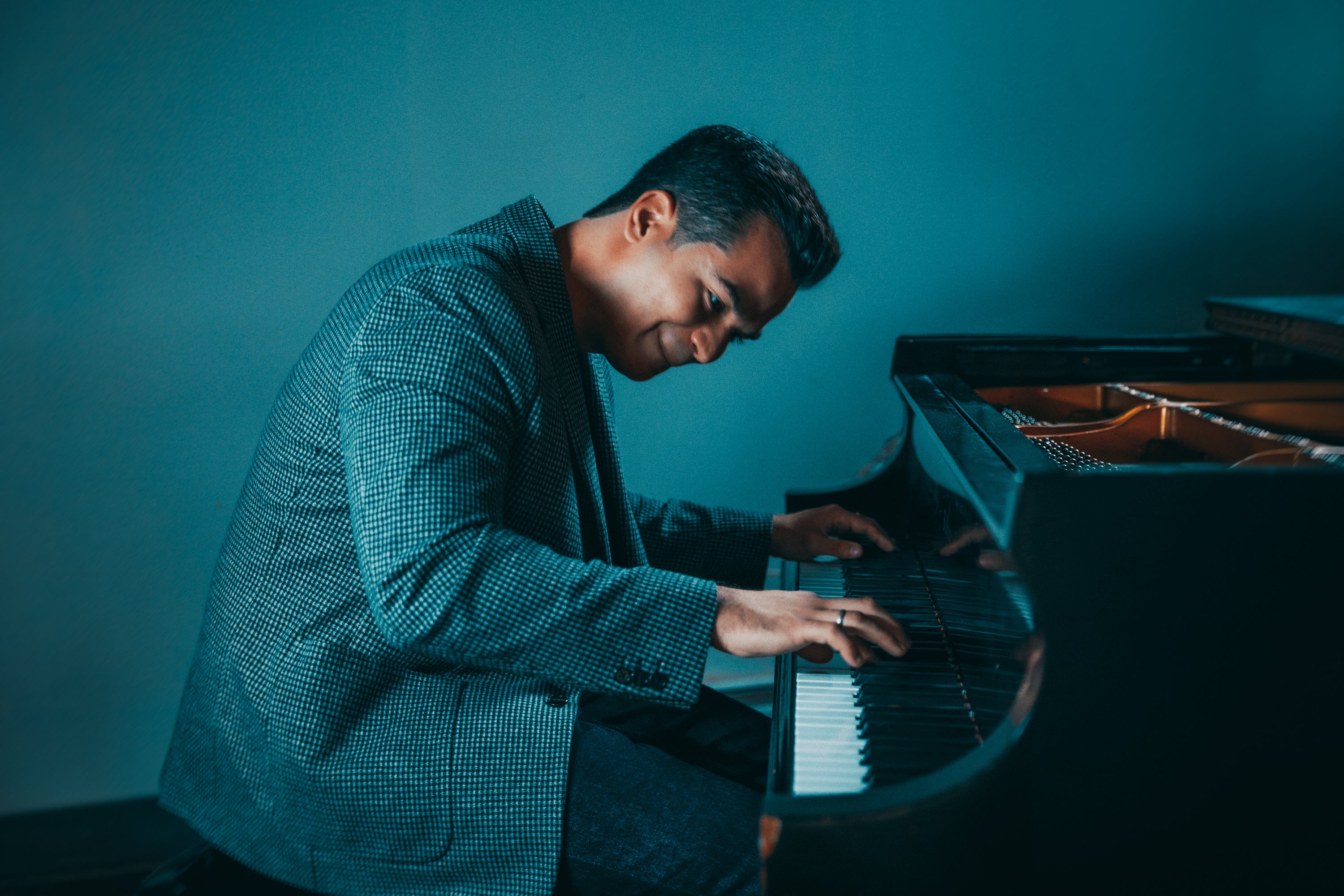
Jorge Mester down at the waterfront

Email Jorge Mester

Jorge Mester has long been considered an ardent champion of contemporary music, Mester has given more than 70 world-premiere performances of works by such composers as Philip Glass, Peter Schickele, Michael Daughtery, Carl Ruggles, Joan Tower, and George Tsontakis.

During his 12-year tenure as music director of the Louisville Orchestra from 1967 to 1979, Mester made 72 world premiere recordings with the orchestra, a prolific achievement for both conductor and orchestra. Mester recalls, “It was an exciting challenge to find music deserving of a permanent record. During that time, I got an incredible overview of contemporary music around the globe.” Among the composers whose works he recorded are Dmitri Shostakovich, Krzysztof Penderecki, Carlos Chavez, Frank Martin, Henry Cowell, Peter Mennin, Walter Piston, Samuel Barber, George Crumb, Leonardo Balada, and Peter Sculthorpe. Mester returned to once again lead the Louisville Orchestra as Music Director during the 2006 season.

Notably, Master’s passion for conducting extends from the stage to the classroom. He served as director of the Juilliard School’s Conducting Department during the early 1980s and, this past season, led a series of conducting workshops for the Buffalo Philharmonic Orchestra. He has also been a guest conductor at the USC Thornton School of Music. Says Mester, “I love teaching. I hope to pay back the help which Leonard Bernstein, Gregor Piatigorski, William Schuman, and Jean Morel gave me early in my career. I want to help others they way I was helped.” Indeed, he has taught several generations of conductors, including James Conlon, Dennis Russell Davies, Andreas Delfs, JoAnn Falletta, and John Nelson. In addition, he has mentored early in their careers such internationally acclaimed artists as Nadja Salerno-Sonnenberg, Midori, Renee Fleming, Cho-Liang Lin, and Robert McDuffie.

“I have gained tremendous insight from working with these composers,” says Mester. “What I have learned about their feelings about tempo, balance and musical structure helps me understand how other composers from the Classical and Romantic eras may have thought about their own music.”

Jorge Mester, one of the world’s most dynamic conductors, has served as music director of The Pasadena Symphony since 1984, and celebrates his 20th Anniversary season by leading the orchestra in eight concerts during the 2004-2005 season. He is conductor laureate of the prestigious Aspen Music Festival, which he led as music director for 21 years. This season, he also assumes the post of music director of the Naples Philharmonic Orchestra in Florida in addition to his work with The Pasadena Symphony. Indeed, throughout his career, Mester has brought excellence and prominence to each of the organizations he has led.

Mester served as a guiding force in the music world during his 21-year affiliation with the Aspen Music Festival (1970 – 1991), an organization he describes as having its own unique dynamics and personality due to the synergy between the distinguished faculty, acclaimed guest artists and gifted young musicians. He says, “That made it possible for me to put together programs that set the festival apart both in scope and quality.” It is a characteristic for which Mester is still widely regarded.

In 1985, he received Columbia University’s prestigious Ditson Conductor’s Award for the advancement of American music. Other Ditson Awards recipients include Leonard Bernstein, Eugene Ormandy and Leopold Stokowski.

Mester previously put his unique stamp on the Puerto Rico Festival Casals during the seven years he served as its music director beginning in the late 1970s. As the artistic director of the National Orchestral Association’s New Orchestra Music Project from 1988 to 1992, he became familiar with an impressive number of American composers and had the opportunity to present many new works at Carnegie Hall. He also served as chief conductor of the West Australia Symphony Orchestra in Perth and principal guest conductor of both the Adelaide Symphony and the St. Paul Chamber Orchestra. From 1998 to 2002, he served as artistic director of the Orquesta Filarmonica de la Ciudad de Mexico in Mexico City, with which, in 2000, he conducted an unprecedented 10-month retrospective of 20th Century music. In Cape Town, he programmed and directed a two-month long contemporary music festival.

A noted opera conductor as well, Mester has led numerous productions for the New York City Opera, the Sydney Opera, Spoleto and the Washington Opera, including Der Rosenkavalier, Cavalleria Rusticana, Ì Pagliacci, La Bohème, Le Nozze di Figaro, Madama Butterfly, Salome, and The Cunning Little Vixen. He has also guest conducted the Royal Philharmonic Orchestra of London, the Boston Symphony, the Philadelphia Orchestra, the Detroit Symphony, the Cincinnati Orchestra, the Seattle Symphony, the Oregon Symphony, the Milwaukee Symphony, the Rochester Philharmonic, the Buffalo Philharmonic, the Cape Town Symphony Orchestra and the Lausanne Chamber Orchestra. He commanded worldwide attention when he conducted the opening ceremonies for the Getty Center in Los Angeles in 1997 and subsequently served as artistic director of the Center’s first classical music series.

In 1998, Mester conducted a series of archival recordings for the Milken Family Foundation in Barcelona, Spain. He has also made two recordings with The Pasadena Symphony for the Auracle label. The first, a numbered limited edition, was released in 1994 and features Strauss’s Also Sprach Zarathustra! and Saint-Saëns’s Symphony No. 3 in C Minor. The second, released in 1997, features Stravinsky’s Le Sacre du Printemps and Rachmaninoff’s Symphonic Dances.

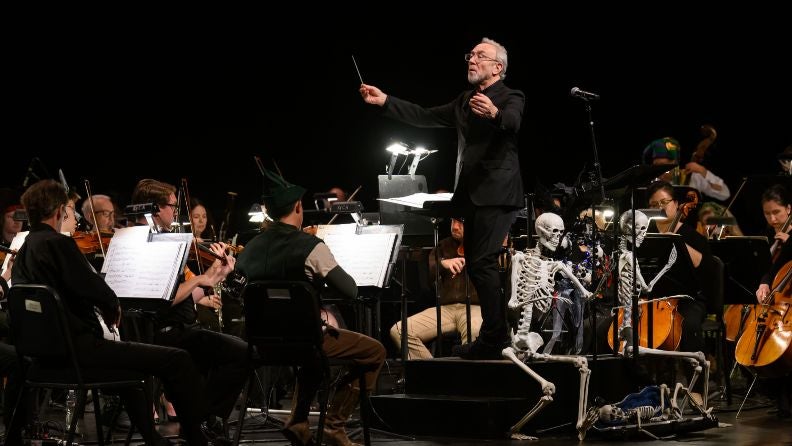
Mester is currently expanding the boundaries of classical music presentation through an ongoing series of original “symphonic theatre” productions, semi-staged productions that incorporate classical music, dance and drama. The first production, a collaboration with actor/director John de Lancie, was the world premiere in 2001 of a semi-staged presentation of A Midsummer Night’s Dream with incidental music by Felix Mendelssohn and film composer Erich Korngold. Mester and de Lancie’s second project married Molière’s Le Bourgeois Gentilhomme with Richard Strauss’s incidental music, and their third focused on Romeo & Juliet and featured the music of Berlioz, Prokofiev, Bernstein and other composers, with a cast of singers, actors and dancers.

Mester, who is of Hungarian descent, was born and raised in Mexico City and currently resides in Southern California. An accomplished violist, he performed with the Beaux-Arts Quartet for several years before focusing exclusively on conducting.